HI THERE
I FOUND THIS ARTICLE PRESCIENT;
this was written before there was a large Lancair population; and yet the information equally applies to our airplanesby Alfred Scott
|
This article appeared in the March 1992 issue of
the Falco Builders Letter. |
Whenever there's an accident in an airplane, there's a natural
tendency in all of us to dismiss the mistakes that others have
made as something we would never do. We sagely recount the unfortunate
pilot's error-he ran out of gas... tried to take off with... tried
to do a roll-all things that somebody else did. And if it's in
another type of airplane, then we sneer at that, too.
But there's a harsh reality we should all face up to, with
so many high-performance homebuilts now flying, there's a pattern
of accidents that's undeniably there, and any designer, kit supplier
or pilot who tries to paint this problem as a 'Brand-X' problem-you
know, that other design-is simply over-exercising his arrogance.
So let's take a look at the problem, see what lessons can be
learned, and ask how all of us can make a difference.
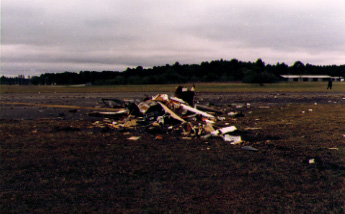
In the case of the Falco, we've had three fatal accidents out
of the first thirty or so Sequoia Falcos to fly. In two of these,
the pilot was on literally his second flight in the plane. One
took off with essentially no fuel in the tanks and then attempted
to turn back to the field when the engine stopped. The other appears
to have attempted aerobatics. In the third accident, the pilot
was on his first instrument flight and ended up low on fuel, shooting
a back-course approach from the right seat, on a rainy night that
was right down to the minimums. They were obviously quite scared
and ran out of fuel right over the field, tried a sharp turn to
the runway, stalled and crashed.
The Smythe Sidewinder has lost more than 30% of its fleet to
stall-spin accidents, yet the airplane has a perfectly normal
configuration and with no obvious flaws. But it was the Glasair
III that finally got everyone's attention. With about 38 flying,
during one six-month period six airplanes were totaled. There's
simply no way to ignore such things.
What got me started on this was a conversation with Dave Noland
of
The Aviation Consumer. We were talking about the accident
rate among high-performance kitplanes, and Dave mentioned the
experience of the Grumman American Yankee. Some years ago, he
had done a story on the plane, which had a
terrible accident
rate-the worst of any production single by a country mile.
And when they looked at the statistics, one thing stood out:
almost without exception, the accidents were occuring to pilots
who had very little time in the Yankee. Total time in all airplanes
made very little difference. It didn't make any difference if
you had 100 hours or 5,000 hours in other planes-what mattered
was whether you had only a little time in the Yankee. (By 'Yankee',
I mean all of that family of airplanes, from the original stubby-winged
Bede design to the LoPresti-cleaned-up 180-hp Tiger.)
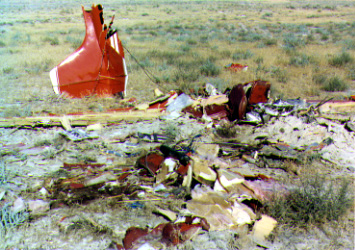
The American Yankee Association did something about it, and
the results are astonishing. About three or four years ago, they
started a pilot familiarization program. There are about 20 to
30 check pilots, who must be CFIs, scattered around the country
who take a pilot through a familiarization program. The curriculum
is standardized and focuses on the peculiarities of the Yankee-the
castering nosewheel, the sensitivity in pitch and roll, the need
to be 'on airspeed' on approach (particularly with the early models),
porpoising on landing, etc.-but there is no required number of
hours for the program. It is up to the check pilot to say when
the pilot is comfortable with the airplane.
Complete this familiarization program, and you will qualify
for a 10% discount on your insurance. That's nice, but the real
payoff is in the accident rate, which has gone to essentially
nil since the program began.
Avemco's vice-president of underwriting, Jim Nelson, confirmed
that this is the same syndrome that they found with the Glasair
III. Many of the airplanes were professionally built and then
test-flown by the owner who found himself at the stick of a very
high performance aircraft.
The Glasair III is a very-high-powered, high-wing-loading airplane.
It was like jumping into a P-51 without proper training. Lose
an engine, and you come down at 2600 fpm.
And worse yet, in the opinion of many experts, there was a
lot of bad advice floating around on how to fly the plane. Pilots
were being told to fly steep approaches which caused landing accidents.
You fly the plane like a turbine corporate twin, say the experts,
with a normal approach angle and carrying a bit of power right
down to the pavement.
Avemco also became worried about the quality of the construction.
Stoddard-Hamilton told
The Aviation Consumer that one recently
totalled Glasair was deemed unrepairable simply because the airplane
had been too ineptly constructed to make restoration viable. There
are concerns about contaminents in the fuel tanks, overall construction
quality, and of course everyone is concerned about modifications.
In order to provide insurance, it was necessary to find a way
to ensure that the aircraft was airworthy, repairable, and that
the pilot was trained to fly it. The Sport Aircraft Manufacturers
Association, Stoddard-Hamilton, and Avemco put together a program
to make insurance available under certain conditions.
First, they require an initial inspection for overall quality.
They want to know from the beginning it is built right and can
be repaired if crashed-you can bet that Avemco has insured its
last not-worth-repairing Glasair. This inspection is in addition
to the FAA inspection, and it typically takes 30 to 40 hours of
labor.
Second, they wanted to be sure that the pilot could fly the
aircraft. Working with PIC (Professional Instrument Courses),
they established an initial and recurrent training program. Pilots
are required to take annual recurrency training. The training
covers slow flight, stalls, problems with gear extensions, etc.
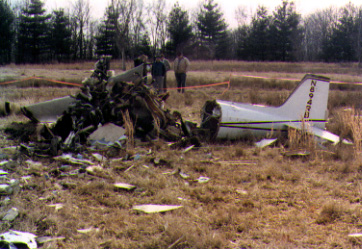
Do all this and Avemco will insure you. Don't comply, and you
can buy your insurance elsewhere, thank you very much.
This approach is definitely the coming thing. The initial inspection
will vary with the aircraft, and will probably only be required
with certain aircraft where the insurance company has concerns
about the ability to repair the airplane and to find someone who
can do the work. The conventional methods of construction-steel
tubing, fabric-covering, wood, and aluminum-are all things they've
dealt with for years.
And the requirement for a formal training program will initially
apply only to the Glasair III, but owners of other high performance,
high powered airplanes-Lancair IV, Venture, SX-300, etc.-can count
on it.
But just because an airplane like the Falco has a moderate
wing loading and average approach speed is no reason to relax.
The Yankee was considered 'real sporty' in its day, but the Falco
has much lighter controls, a faster rate of roll and greater sensitivity
in the controls, even though it may be easier to land.
Avemco would like to see a training facility for every high
performance airplane, and you really can't argue with the benefits
of a such a program. Insurance-enforced training already exists
for a number of complex twin-engine aircraft, and we're going
to see more of this sort of thing with high-performance homebuilts.
I love the idea, myself. Insurance companies make decisions
based on their experience in the field. Some years ago when I
owned an old Victorian apartment building, we found it was the
insurance companies who really laid down the law with us on safety
issues-not municipal building inspectors with their building codes.
Insurance companies were free to lay down a new list of requirements
each year, they were always tough on us, and I always found them
to have good reasons. (In fact, I hold the opinion that if the
FAA got completely out of the certification business and left
it all to the insurance companies, we'd have safer airplanes.)
Overall the safety record of homebuilt aircraft is not greatly
different from production aircraft. There are slightly fewer fatalities
per aircraft (which is slightly deceptive because homebuilts have
fewer seats on the average) and slightly more accidents. The mix
is different: lots of low-altitude buzzing accidents, not many
weather-related mishaps, and aerobatics are thought to be a factor
contributing to the slightly higher rate among homebuilts.
But here's the predictable part: approach the transition to
the Falco with the same rather cavalier attitude that's been practiced
in the past, and some of you reading this will die as a result.
If that's not appealing to you, then here's what we can do.
Let's start by recognizing that it's smart to get checked out
in the Falco by an experienced pilot. Builders who have finished
their Falcos have been quite good about giving people rides, but
let's recognize that it's not just a matter of being nice-it's
saving lives.
I think it's time we put together a familiarization guide for
the Falco, a syllabus of all of the things that are different
about the Falco, and a formalized curriculum to introduce pilots
to the Falco. I'd love to have suggestions and contributions from
any of you.