|
Or move the CG forward.
The further the CG gets behind the center of lift,
. . or conversly . . the further the center
of lift gets in front of the CG (reflex flaps)
. . . . the less longitudinal stability you
have
. . . . or even goes negative.
Check it out, trim for cruise and hold the elevator
still.
. . . . see if porpoising starts and
amplifies.
. . . . if so . . . your dynamic stability is
negative.
Wolfgang
----- Original Message -----
Sent: Tuesday, September 24, 2013 6:19 AM
Subject: Re: [LML] Lancair 320/360 performance and
stability
Chris,
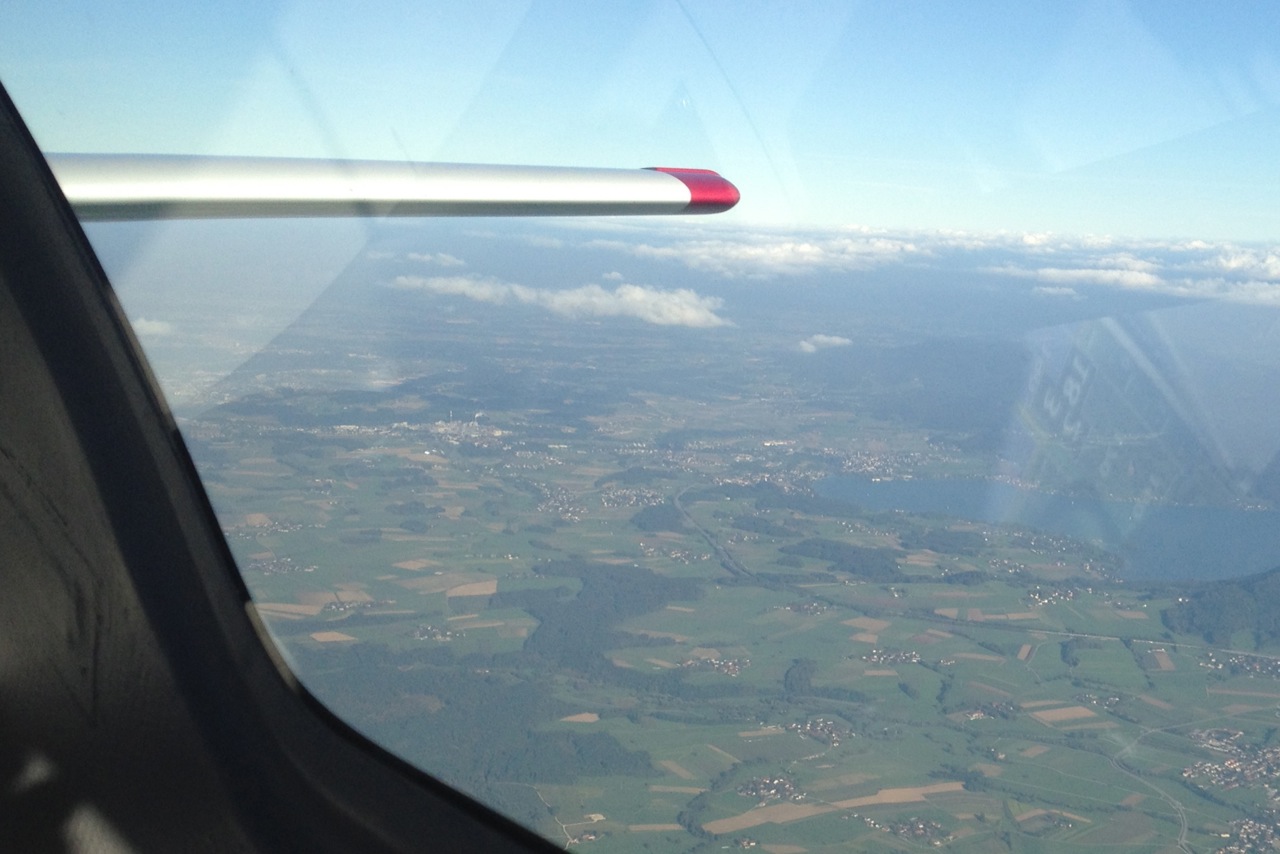
today I made a picture during Cruise with Autopilot at 7500ft with
following configuration:
770 kg 40l in header, 20l in each wing (80l total), 75kg and 83kg for
pilot and co.
Flap was on 7° reflex CG 26,20"
My design CG is 22,8 - 30,3 from firewall back,
horizontal was installed - 0.6°
So it looks like if I would add more reflex than 7°, I would need more down
elevator.
So the gain with the higher reflex would be lost with the down
elevator....
Christian
Scott,
Thanks. Examining the 360 (MkII) performance and
characteristics in greater detail as been very interesting.
The small tail has a very low aspect ratio and may indeed be
subject to higher drag if the stabilizer incidence requires significant
elevator input to trim. The MkII tail adds about 2 sqft, but more
significantly has a much greater aspect ratio. My stab was well
aligned for the sweep of flap settings as the elevator deflection was about
0.5 degrees TE down. In fact, all of the points were inside
of 0.1 degrees of elevator movement.
The concept of aft CG being more efficient is by reducing trim
drag. It is used quite successfully in aircraft that adjust the entire
stabilizer for trim. A fixed stab angle that is too far from
neutral in the aft CG or in the 'super-reflexed' cruise condition
could negate any benefit. In my case the plot of flap setting
vs. airspeed showed that I had not yet reached a peak. Extrapolating the
curve gives me another 2 kts at 12 degrees reflex. Extrapolating is a
bit dangerous with any polynomial curve, but on the other hand this one
has an exceptionally well behaved 2nd order trend. -7
degrees certainly provides a large portion of the benefit.
It would be very interesting to run through the same series of
tests with a small tail at the same static margins for a side by
side comparison.
Chris
Chris Zavatson
N91CZ
360std
Chris,
Great research.
In my small tailed 320, increased flap reflex experimentation did
not result in increased top end speed. The nose up pitch was
increased, requiring increased nose down trim - probably resulting in
greater empennage drag negating any reduction in drag from the
greater reflex. Of course, we would have to discuss the angle of
incidence of the small tail and its relationship to the elevator correcting
for nose down pitching ( my incidence was at -.9 degrees).
By moving weights forward and aft in the same flight, forward CG
was better for maximizing speed - unlike some aircraft that see max speed
when the CG is at the neutral point, probably a consequence of more standard
wing/tail design that saw drag from wing/horizontal +/- lift factors more
balanced and minimized.
|