|
|
In a message dated 9/2/2003 8:12:46 PM Eastern Daylight Time, Lehanover writes:
The second factor, the flow rate of the oil and water, could be negatively > affected by the use of the water thermostat. The thermostat works by > restricting the flow of water from the engine through the radiator, therefore > when you reach 180 degrees, it slows down the water flow. This means that the > water flowing by the oil cooler tubes (in the headers) is going slower. This > reduces the *rate* of heat transfer across the tube (the heat transfer > coefficient), so that it may reduce the cooling effectiveness of the oil > cooler. If we take your 240 degree oil, expose it to the radiator inlet tank > (180 degree) you only have 60 degrees delta T to work with. On the other end > of the radiator, you have much cooler water (any measurement?) which would
> improve the delta T, but if the heat transfer coefficient is small, that won'
> t help much.
> Actually the thermostat restricts flow until the coolant reaches the rated temp, and then opens to allow nearly unrestricted flow. The oil temp in the pan is of no interest. The oil temp measured as close to the rear main oil gallery as possible should be 210 or below. That is because the bearing overlay material is loosing strength with higher temps. This is a rule developed based on
racing, (Racing Beat) where RPMs will be around 9,000 for 13Bs. Or 9,500 for 12As. Bearing stress is lower around 6,500 RPM. Still, it's not a bad idea to keep the oil well under 200 degrees. The engine builder reports power lost above 160 degrees on the oil temp. Water under 200 is OK. Power loss above 180, but no damage. This Sunday at Mid Ohio we finished 4th. Had a chance at 3rd but got bumped off on the second lap, and came back on in last place. Oil pressure was 85 PSI. oil temp was 190 degrees. Water was 170 degrees with a restrictor but no thermostat. Rev limiter is at 9,500. Shifting at 9,400. HP is about 240. We need about 250.
Lynn E. Hanover
|
|
In a message dated 9/2/2003 7:43:15 AM Eastern Daylight Time, wschertz@ispwest.com writes:
The second factor, the flow rate of the oil and water, could be negatively affected by the use of the water thermostat. The thermostat works by restricting the flow of water from the engine through the radiator, therefore when you reach 180 degrees, it slows down the water flow. This means that the water flowing by the oil cooler tubes (in the headers) is going slower. This reduces the *rate* of heat transfer across the tube (the heat transfer coefficient), so that it may reduce the cooling effectiveness of the oil cooler. If we take your 240 degree oil, expose it to the radiator inlet tank (180 degree) you only have 60 degrees delta T to work with. On the other end of the radiator, you have much cooler water (any measurement?) which would improve the delta T, but if the heat transfer coefficient is small, that won'
t help much.
Actually the thermostat restricts flow until the coolant reaches the rated temp, and then opens to allow nearly unrestricted flow. The oil temp in the pan is of no interest. The oil temp measured as close to the rear main oil gallery as possible should be 210 or below. That is because the bearing overlay material is loosing strength with higher temps. This is a rule developed based on racing, (Racing Beat) where RPMs will be around 9,000 for 13Bs. Or 9,500 for 12As. Bearing stress is lower around 6,500 RPM. Still, it's not a bad idea to keep the oil well under 200 degrees. The engine builder reports power lost above 160 degrees on the oil temp. Water under 200 is OK. Power loss above 180, but no damage. This Sunday at Mid Ohio we finished 4th. Had a chance at 3rd but got bumped off on the second lap, and came back on in last place. Oil pressure was 85 PSI. oil temp was 190 degrees. Water was 170 degrees with a restrictor but no thermostat. Rev limiter is at 9,500. Shifting at 9,400. HP is about 240. We need about 250.
Lynn E. Hanover
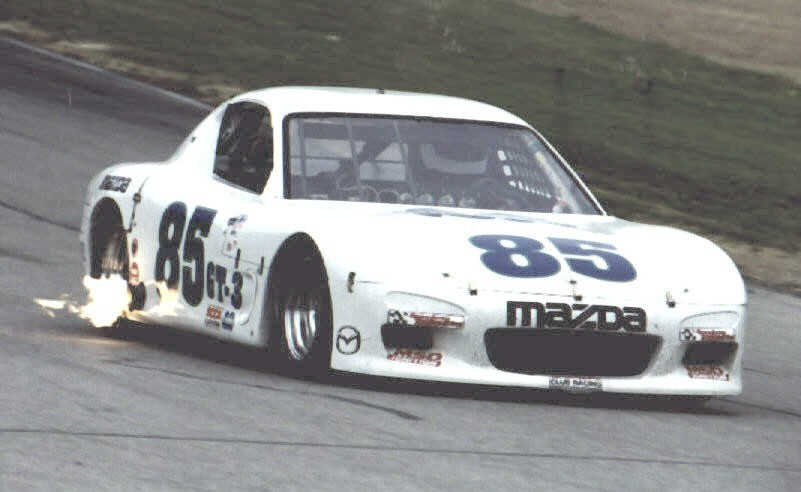
JessiesRacer_WEB.jpg
|
|
|